Mara Neumann · 18 October 2026
Investigating Surface Longevity Patterns in Polished Stone Applications Within Modern Infrastructure Projects
Polished stone surfaces appear throughout modern infrastructure projects where durability under heavy use and environmental exposure matters most, and researchers track how these materials hold up over time in settings like transit hubs, public plazas, and commercial towers. Data from field monitoring programs reveal consistent patterns tied to stone type, finish quality, and maintenance routines, while installation techniques influence how quickly micro-abrasions develop on exposed faces.
Common Stone Types and Their Deployment
Granite, marble, and quartzite dominate selections for polished applications because their mineral composition resists certain forms of mechanical wear, yet each exhibits distinct responses to urban pollutants and freeze-thaw cycles. Projects completed since 2018 often specify honed or polished granite for exterior walkways where foot traffic reaches several thousand individuals daily, whereas interior column claddings in airport terminals frequently incorporate marble slabs chosen for their reflective qualities under artificial lighting. Observers note that selection criteria now incorporate regional climate data more systematically, with quartzite gaining favor in coastal zones because its higher hardness rating correlates with slower surface recession rates according to laboratory abrasion tests.
Key Variables Affecting Surface Performance
Traffic volume, cleaning chemistry, and atmospheric deposition interact to shape longevity outcomes, and monitoring stations installed on several North American transit projects have logged measurable changes in surface roughness after five years of service. Acidic rainfall accelerates etching on calcium-based stones while particulate matter from vehicle emissions lodges in micro-pores, creating conditions that reduce slip resistance over successive seasons. Maintenance logs from multiple sites indicate that pH-neutral cleaners combined with scheduled sealing intervals extend the period before visible dulling occurs, although the exact interval varies with local air quality indices. Those who've examined core samples from high-use areas find that subsurface micro-fractures often precede visible surface loss, pointing to the value of non-destructive testing methods such as ultrasonic pulse velocity measurements.
Investigation Techniques Employed by Research Teams
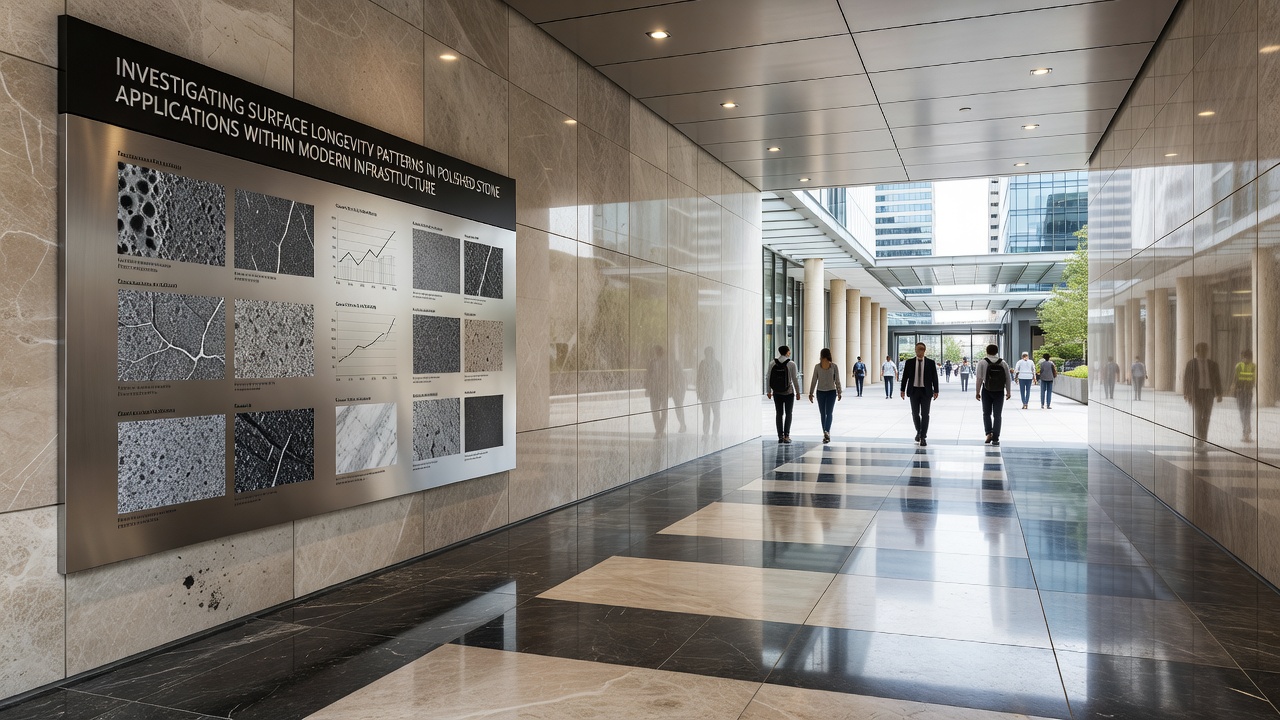
Teams combine profilometry, reflectance spectroscopy, and accelerated weathering chambers to map how polished layers degrade under controlled conditions that replicate urban stressors. Field campaigns supplement these efforts by deploying portable gloss meters at quarterly intervals, generating datasets that allow statistical comparison across different stone batches and installation years. European infrastructure agencies have funded multi-year studies that track identical stone types in contrasting climates, revealing that humidity levels above 70 percent for extended periods correlate with faster biofilm colonization on polished surfaces. Researchers discovered that joint sealants play an underappreciated role because failures at these interfaces permit water infiltration that undermines the stone-to-substrate bond and promotes edge chipping.
Patterns Observed in Recent Infrastructure Projects
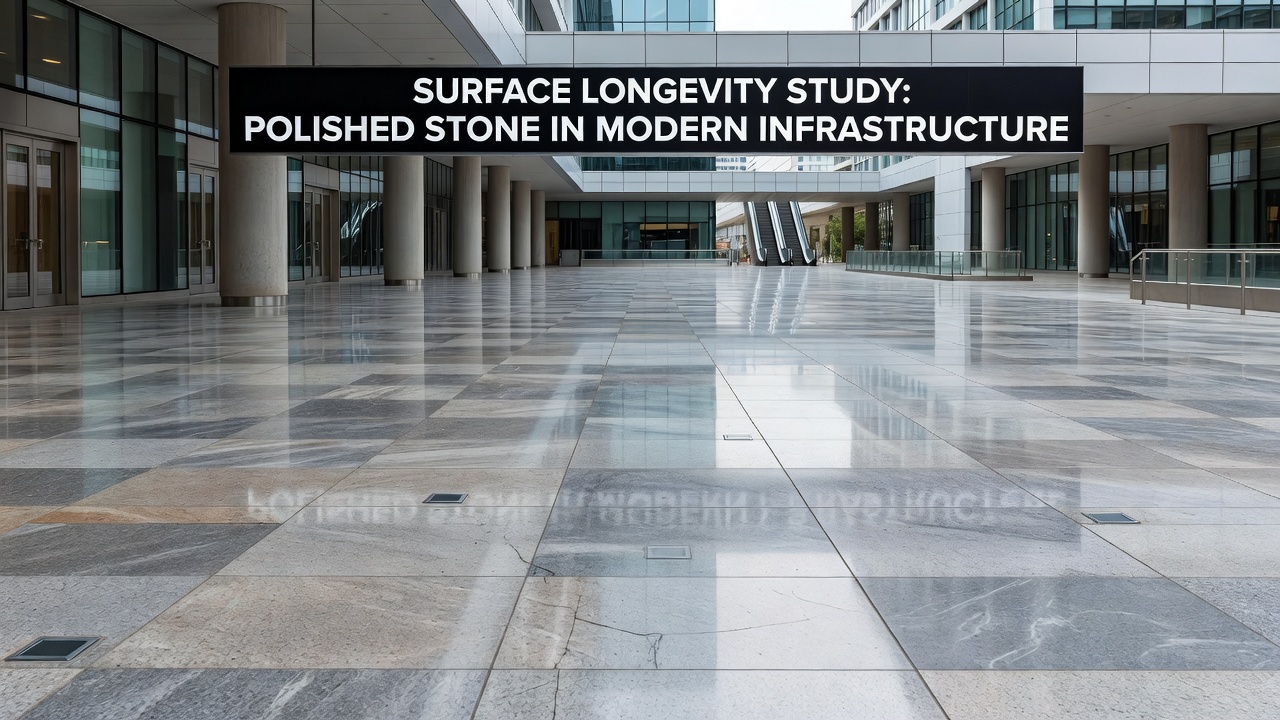
Analysis of installations completed between 2020 and 2024 shows that polished granite walkways in temperate climates retain acceptable gloss levels for eight to twelve years before major intervention becomes necessary, while similar surfaces in arid regions demonstrate slower degradation rates due to reduced moisture-related weathering. Data compiled by the USGS National Minerals Information Center indicate rising demand for dimension stone in infrastructure, with production figures reflecting increased specification for high-traffic public spaces. One study revealed that stone panels installed with ventilated rainscreen systems experienced lower thermal stress and consequently fewer instances of bowing compared with directly adhered assemblies, a finding that has prompted revisions to several municipal design guidelines. What's interesting is how traffic directionality creates anisotropic wear zones, with surfaces near escalator exits showing accelerated loss along predictable pathways that align with pedestrian flow models.
Developments Anticipated Through Late 2026
Industry working groups scheduled to release updated performance benchmarks in October 2026 are expected to incorporate machine-learning analysis of long-term monitoring data, potentially refining predictive models for surface service life. Canadian infrastructure authorities have begun integrating sensor arrays into new stone-clad structures to capture real-time humidity and load data that feed into these models, and preliminary results suggest that predictive maintenance alerts could reduce unplanned interventions by measurable percentages. Meanwhile, laboratory protocols developed at several universities now include combined UV and salt spray exposure sequences that better approximate conditions found along coastal infrastructure corridors.
Conclusion
Longevity patterns in polished stone emerge from the interplay of material properties, environmental exposure, and maintenance practices, and continued collection of field data supports more accurate forecasting for future infrastructure applications. Standards organizations and research institutions across multiple regions continue to refine testing methodologies that capture these dynamics, providing project teams with evidence-based guidance for material specification and upkeep schedules. As monitoring technologies advance, the datasets generated will further clarify how specific interventions influence service intervals across varied climatic zones.